

Perimenopause, Menopause & Mental Health
Feel informed. Feel supported. Feel more like yourself.
Additional Ways to Work With Me
Perimenopause and menopause are natural stages of life, but the transition can affect much more than your menstrual cycle.
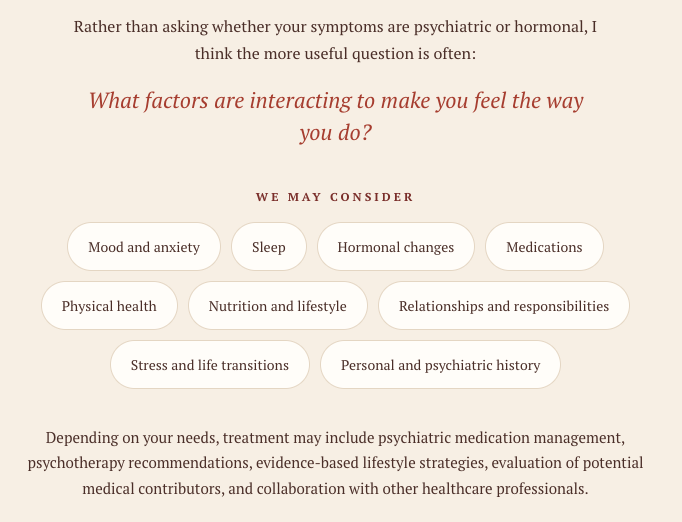
Hormonal changes can interact with sleep, mood, anxiety, concentration, energy, physical health, relationships, and everyday stress.
For some women, these changes are relatively mild. For others, they can significantly affect quality of life.
At York Psychiatry, I don't assume every midlife symptom is caused by menopause—and I don't ignore the role hormonal changes may be playing either.
My approach is to understand the whole picture.
Continue reading to learn more about how I can help with Women’s Health.
Looking for general psychiatric care? Go here.
Sometimes it Doesn’t Even Seem Like “Menopause”
Why Mental Health Can Feel Different During Perimenopause
Hormonal changes don't occur in isolation.
At the same time, many women are managing demanding careers, caregiving responsibilities, aging parents, changing relationships, children becoming more independent, health concerns, disrupted sleep, and other major life transitions.
Risk may be higher for women with factors such as:
Previous depression or anxiety
Significant hot flashes or night sweats
Persistent sleep disruption
Major life stressors
Limited social support
A longer or particularly symptomatic menopause transition
A history of significant adversity or trauma
Risk factors don't mean you will develop a psychiatric disorder.
They mean your symptoms deserve thoughtful evaluation.

→ For some women, this combination can increase vulnerability to depression, anxiety, insomnia, irritability, and cognitive complaints.
→ For other women, they don’t realize the symptoms that seem like generic mental health struggles, such as anxiety or depression, are actually connected to menopause.
Significant symptoms shouldn't automatically be dismissed as "just hormones."
They also shouldn't automatically be attributed to menopause without considering other possible causes.
Which is exactly why you need someone who is knowledgable in both areas, to be able to help you distinguish the root causes and best courses of treatment.
You may notice:
Increased anxiety or worry
Irritability or feeling less patient
Low mood
Difficulty falling or staying asleep
Brain fog or difficulty concentrating
Changes in energy or motivation
Hot flashes or night sweats
Changes in your menstrual cycle
A general feeling that you aren't quite yourself

Appointment Options
Initial Psychiatric Evaluation
$350
A comprehensive psychiatric intake including review of your history and current concerns, diagnostic assessment, and medication evaluation when appropriate.
Extended Follow-Up
$175
For visits that benefit from additional time for psychiatric care, medication management, therapeutic discussion, or more complex treatment planning.
Focused Follow-Up
$150
Focused ongoing appointments for medication management, monitoring, and treatment follow-up.
Insurance: York Psychiatry participates with select insurance plans. Insurance coverage, patient responsibility, and appointment options may vary by plan.
More Information
〰️
More Information 〰️
Depression & Anxiety During the Menopause Transition
Most women don't develop a new psychiatric disorder simply because they enter menopause.
However, the menopause transition can be a period of increased vulnerability for some women, particularly those with a previous history of mood symptoms.
Consider talking with a healthcare provider if you experience persistent:
Sadness or hopelessness
Anxiety, worry, or feeling constantly on edge
Loss of interest or enjoyment
Low energy or motivation
Difficulty concentrating
Significant irritability
Sleep disturbance
Difficulty functioning at work, home, or in relationships
Treatment is individualized and may include psychotherapy, psychiatric medication, treatment of sleep problems, lifestyle interventions, and—in appropriate situations—coordination with a women's health clinician regarding menopausal hormone therapy.
Sleep Matters
Sleep disruption is common during the menopause transition.
Night sweats can repeatedly interrupt sleep, but anxiety, stress, insomnia, medications, medical conditions, and other factors can contribute as well.
Poor sleep can then worsen:
Mood • Anxiety • Concentration • Irritability • Energy • Stress tolerance
For chronic insomnia, Cognitive Behavioral Therapy for Insomnia (CBT-I) is an evidence-based treatment option.
Addressing sleep is often an important part of improving overall mental health.
Hormone Therapy
Menopausal hormone therapy (MHT) is an effective treatment for vasomotor symptoms such as hot flashes and night sweats and may improve associated sleep or mood symptoms for some women.
It is not, however, a stand-alone treatment for moderate or severe depression, and it isn't appropriate for everyone.
Decisions about hormone therapy should be individualized based on symptoms, medical history, personal risk factors, preferences, and potential benefits and risks.
When appropriate, I can coordinate psychiatric care with your primary care, gynecology, or menopause clinician so your mental and physical health are considered together.

When to Reach Out
Consider seeking care if changes in mood, anxiety, concentration, irritability, or sleep are persistent, worsening, interfering with relationships or work, or making it difficult to function the way you normally do.
You don't have to wait until things become severe to ask for help.